Self-Hosted vs. Cloud: Choosing the Right Architecture for Medical Imaging
A comparison of self-hosted and cloud deployment models for medical imaging, examining compliance, cost, control, and data sovereignty considerations.
September 22, 20253 min read
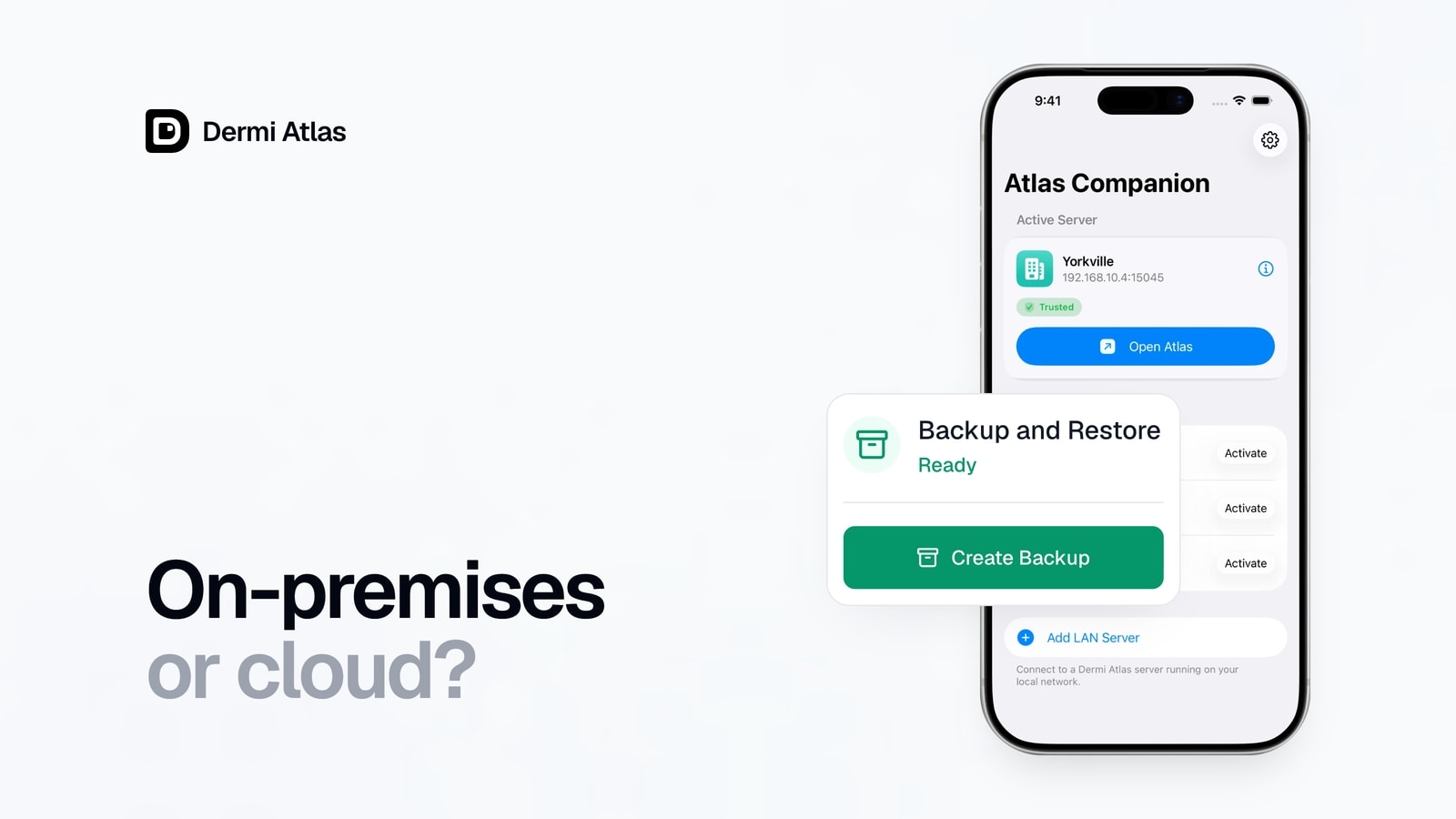
Healthcare organizations evaluating imaging platforms face a fundamental architectural decision: should patient imaging data be stored in the cloud or hosted on-premises, often called self-hosted? Both approaches have legitimate advantages, and the right choice depends on the organization's regulatory environment, technical resources, and priorities around data control.
The Cloud Model
Cloud-hosted imaging platforms store patient data on servers operated by the software vendor or a third-party cloud provider. This model offers several practical benefits:
- No local infrastructure to purchase or maintain
- Automatic updates and patches managed by the vendor
- Accessible from any location with internet connectivity
- Scalable storage without hardware planning
However, the cloud model introduces considerations that healthcare organizations should evaluate carefully. Patient data resides on infrastructure controlled by a third party. Data residency requirements may conflict with cloud provider server locations. Business continuity depends on the vendor's ongoing operations and internet availability. Business Associate Agreements (BAAs) or equivalent contracts are required to establish shared responsibility for data protection.
The Self-Hosted Model
On-premises platforms run on infrastructure owned and operated by the healthcare organization. Patient data never leaves the organization's physical premises. This model provides:
- Complete data sovereignty with no third-party data access
- No dependency on internet connectivity for core operations
- Simplified compliance posture, as the data custodian is also the data controller
- Predictable costs without per-storage or per-user cloud fees
The trade-offs are also real. On-premises deployments require local hardware, even if modest. The organization is responsible for backups, though modern tools can automate this. Initial setup requires more effort than signing up for a cloud service, though deployment tools such as Dermi Atlas Manager can reduce this to approximately 30 minutes.
Compliance Implications
For healthcare organizations subject to HIPAA, PIPEDA, or similar regulations, the deployment model has direct compliance implications. Cloud deployments typically require Business Associate Agreements, data processing agreements, and careful evaluation of where data is physically stored. On-premises deployments simplify this equation by keeping data under the direct custody of the covered entity.
Neither model is inherently more or less compliant. Both can meet regulatory requirements when properly implemented. The difference lies in the complexity and number of parties involved in demonstrating compliance.
Cost Considerations
Cloud services typically use subscription pricing based on storage volume, number of users, or both. Costs scale with usage, which can be advantageous for small deployments but expensive at scale. On-premises solutions involve an upfront infrastructure investment (often a dedicated computer or existing server) with a fixed software license cost. For practices with growing image libraries, the on-premises model often becomes more cost-effective over time.
Making the Choice
The decision between cloud and on-premises deployment should be driven by the organization's specific requirements around data control, regulatory environment, technical capacity, and budget. For organizations that prioritize data sovereignty and want to minimize the number of parties with access to patient data, the on-premises model provides clear advantages.
Dermi Atlas supports the on-premises model, with Dermi Atlas Cloud Demo available for evaluation purposes. This approach allows practices to explore the platform's core features before committing to a local deployment.
Was this article helpful?
Your feedback helps improve these articles
